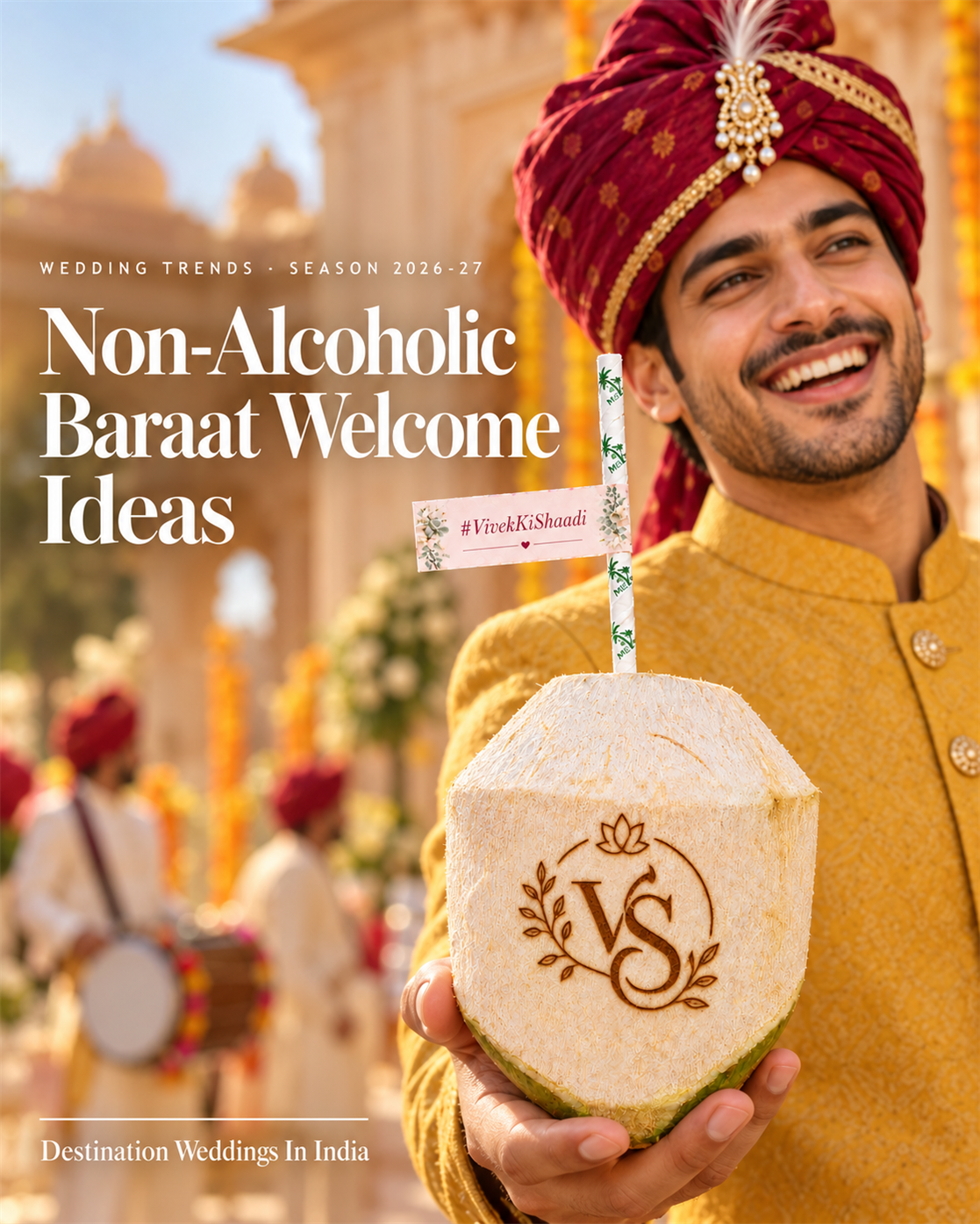
Non-Alcoholic Baraat Welcome Ideas in India for Destination Weddings (2026-27 Guide)
Fresh, hydrating and quick-to-serve non-alcoholic baraat welcome ideas for destination weddings in India, with serving tips for 300+ baraatis, winter options an…
Reviewed by Shivam Agarwal, Co-founder — Mr. Coconut
Walk through any wedding in Delhi or Mumbai this season and you will see four categories on repeat: a welcome drink at the entrance (now fresh coconut water or sugarcane more often than aam panna), bottled soft drinks, a mocktail counter, and, where the family is comfortable, a bar.
The shift in 2026 is that guests notice when a wedding offers only the second category. Bottled cola at a Rambagh Palace wedding feels like a missed opportunity. The best drinks for wedding functions today are fresh, visible and, ideally, served live.
Sangeet is a night of dancing, so think hydration first and sugar second. A mocktail bar works, but smart hosts pair it with a hydration counter so guests have an alternative to syrupy drinks between songs.
Tender coconut water is the natural fit: light, cooling and free of the sticky aftertaste that follows most mocktails. If the family serves alcohol, it doubles as a mixer base. For a sangeet at The Leela Palace New Delhi or Taj Lands End in Mumbai, planners place the counter near the dance-floor exit, exactly where the thirst hits.
Planning drinks function by function is the easiest upgrade a wedding can get. For a live engraved-coconut station at any function, book a date with Mr. Coconut and we will send a per-guest quote for your city and guest count.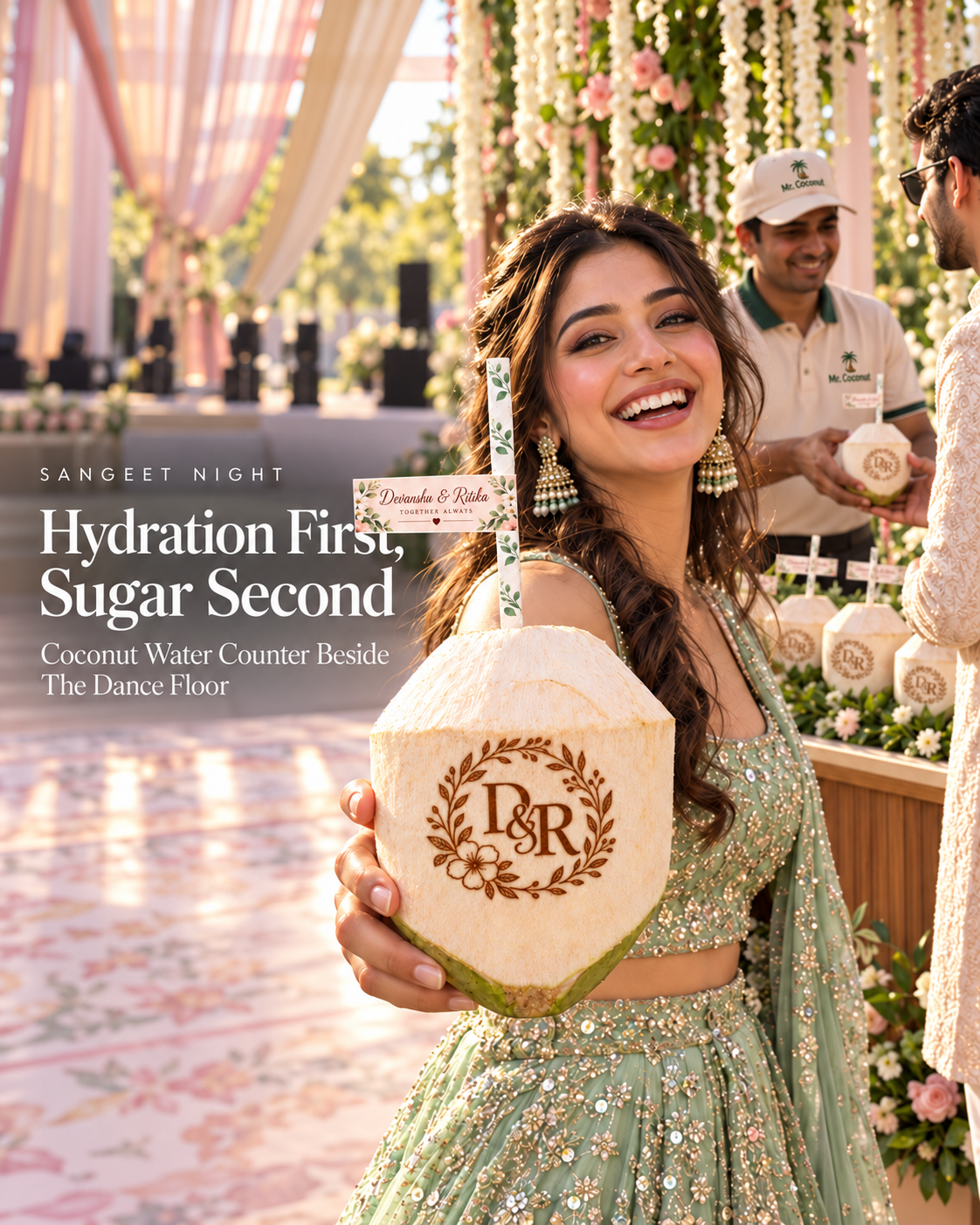
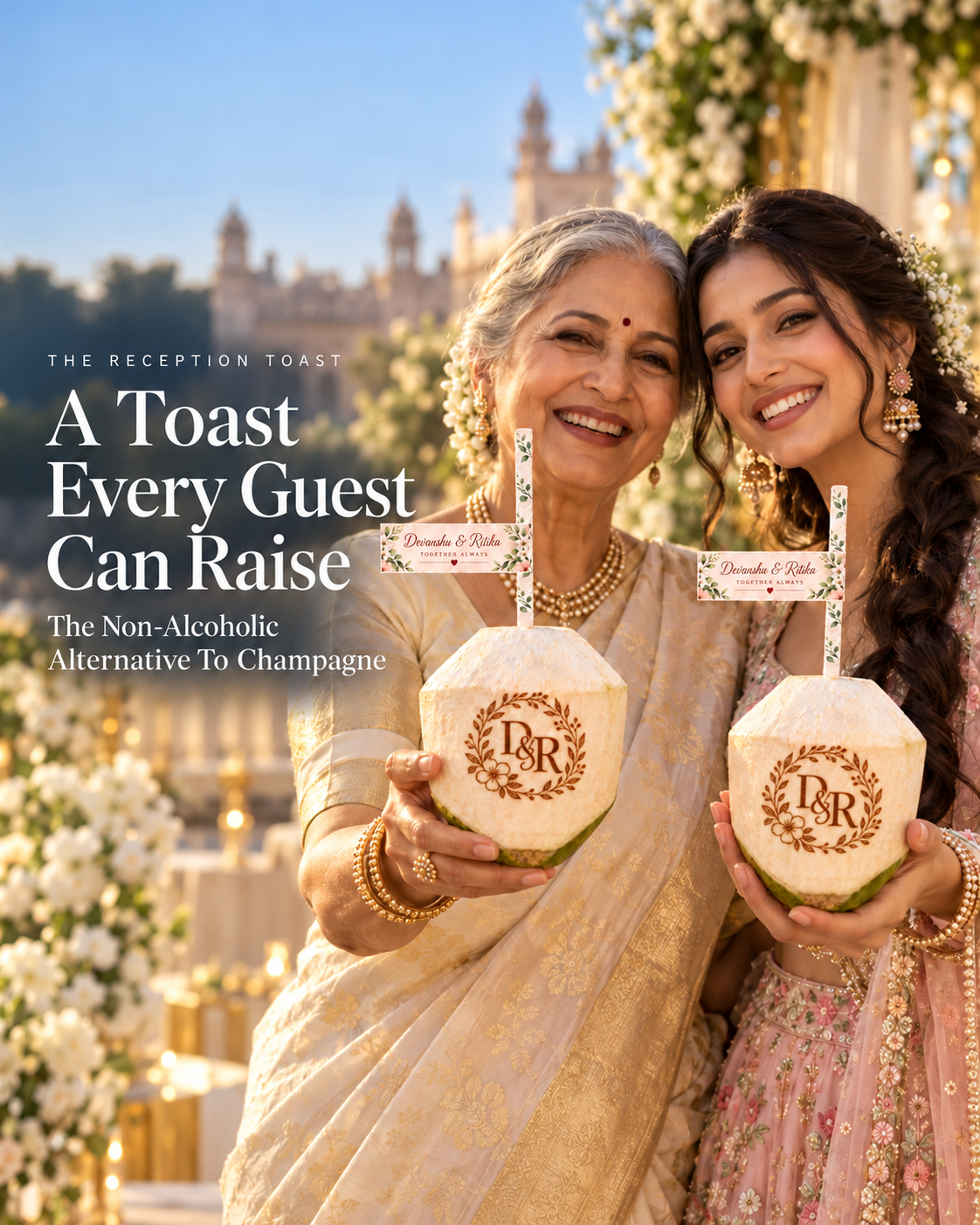
The reception toast is where most Indian families hesitate. Many guests do not drink, elders are watching, yet the moment needs something to raise. The answer that works across communities is a sparkling non-alcoholic pour: sparkling water with fresh fruit, cold-pressed juice in a flute, or sparkling coconut-and-lime from a counter.
What matters is the glass and the ceremony, not the alcohol. At a Taj Falaknuma Palace reception in Hyderabad, a flute of chilled coconut water with mint photographs as well as champagne and includes children and grandparents in the toast. The best non alcoholic drinks for wedding receptions are the ones served cold, fast and in a proper glass.
It is 4 pm at Fairmont Jaipur in late November. The baraat has just danced up the drive, 300 guests are flushed from the dhol, and the first thing every one of them wants is something cold in their hand. That one choice quietly sets the mood for the next three days, yet drinks are usually the last line on the planning sheet. This guide fixes that, function by function.
Some do, many do not, and most sit in between. Families in Jaipur and Jodhpur often run a bar for the sangeet while keeping the pheras and reception dry. South Indian weddings in Bangalore lean dry across functions. Goa destination weddings at Grand Hyatt Goa or Taj Exotica usually have both.
The rule is to never make the non-drinker feel like an afterthought. If the bar has eight options, the dry counter needs more than cola. A coconut water stall at weddings solves this neatly, because it is a destination in its own right, not a consolation prize.
Rich, spicy wedding food needs a drink that cools rather than competes. Cola fights with biryani and leaves guests bloated before dessert. The traditional answers still work best: chaas, jaljeera, nimbu pani and fresh coconut water, which is mildly sweet, rich in electrolytes and settles the stomach after a plate of dum biryani at ITC Maurya. At Hyderabadi weddings, planners often set the coconut counter beside the biryani live counter; the two queues feed each other.
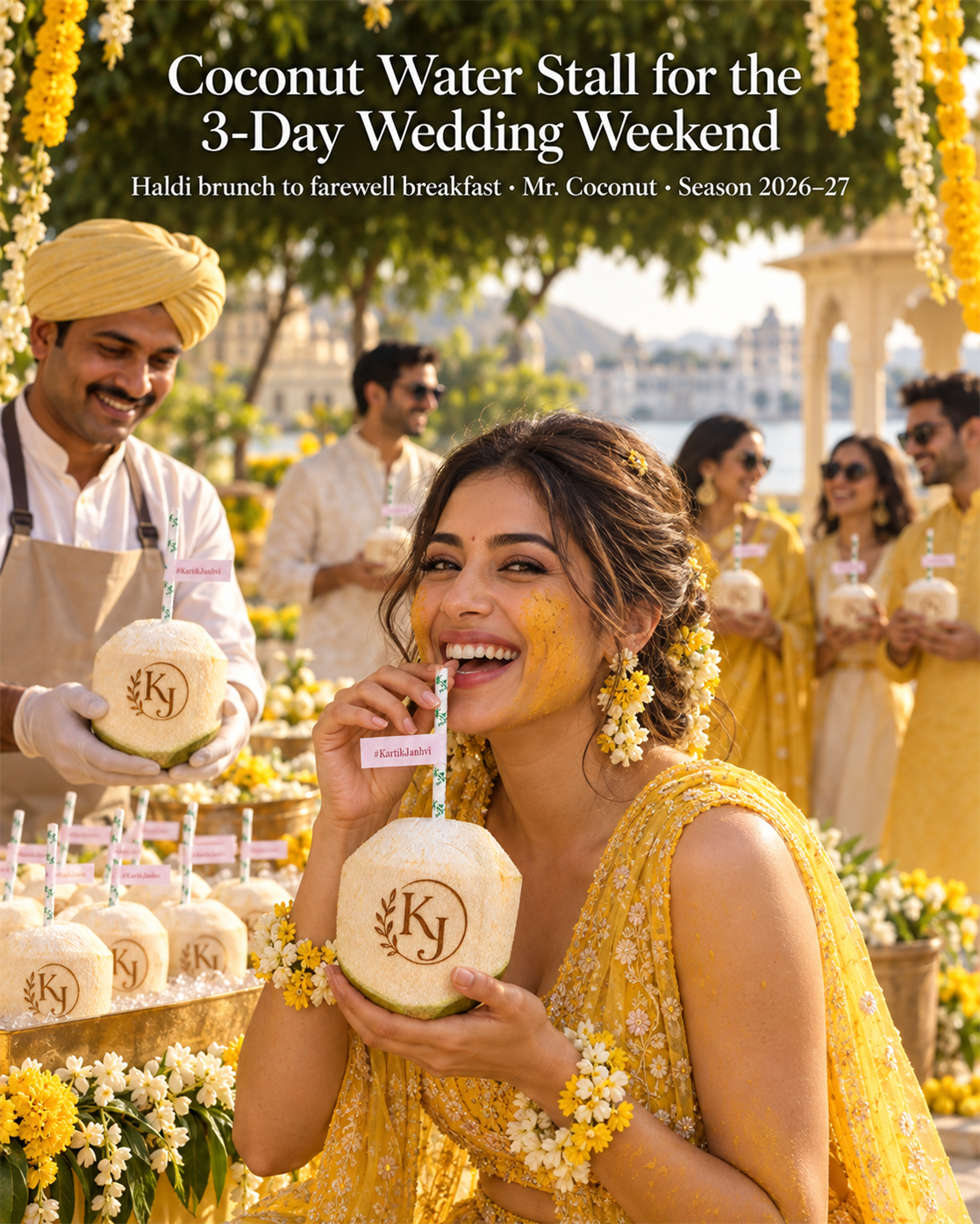
Nobody answers this clearly, so here is the planner's working method. Count guests per function, not per wedding. Plan two to three drinks per guest for a two-hour daytime function and three to four for an evening that runs past dinner. Outdoor daytime functions, such as a Pushkar haldi at The Westin or a Udaipur mehendi at The Oberoi Udaivilas, push consumption up because of heat.
Add a 15 to 20 percent buffer for the baraat, which always arrives thirstier than expected. For coconuts, one per guest per function is the standard brief. Costs are quote-based by city, quantity and plan, so ask every vendor for a per-guest figure per function rather than a lump sum; that makes comparing a mocktail bar against a coconut stall far easier.
Planning drinks for a wedding this season? Mr. Coconut sets up live engraved-coconut stations across Jaipur, Delhi NCR, Mumbai, Hyderabad and destination venues across India, with the coconut count, serving staff and cart handled for you. See the Gold, Diamond and Platinum plans or ask for a per-guest quote.
If bottled soft drinks must stay, decant them into glass dispensers with fruit and ice, keep them at a staffed counter rather than self-serve tables, and give them a role as the chaser beside the mocktail bar rather than the main event.
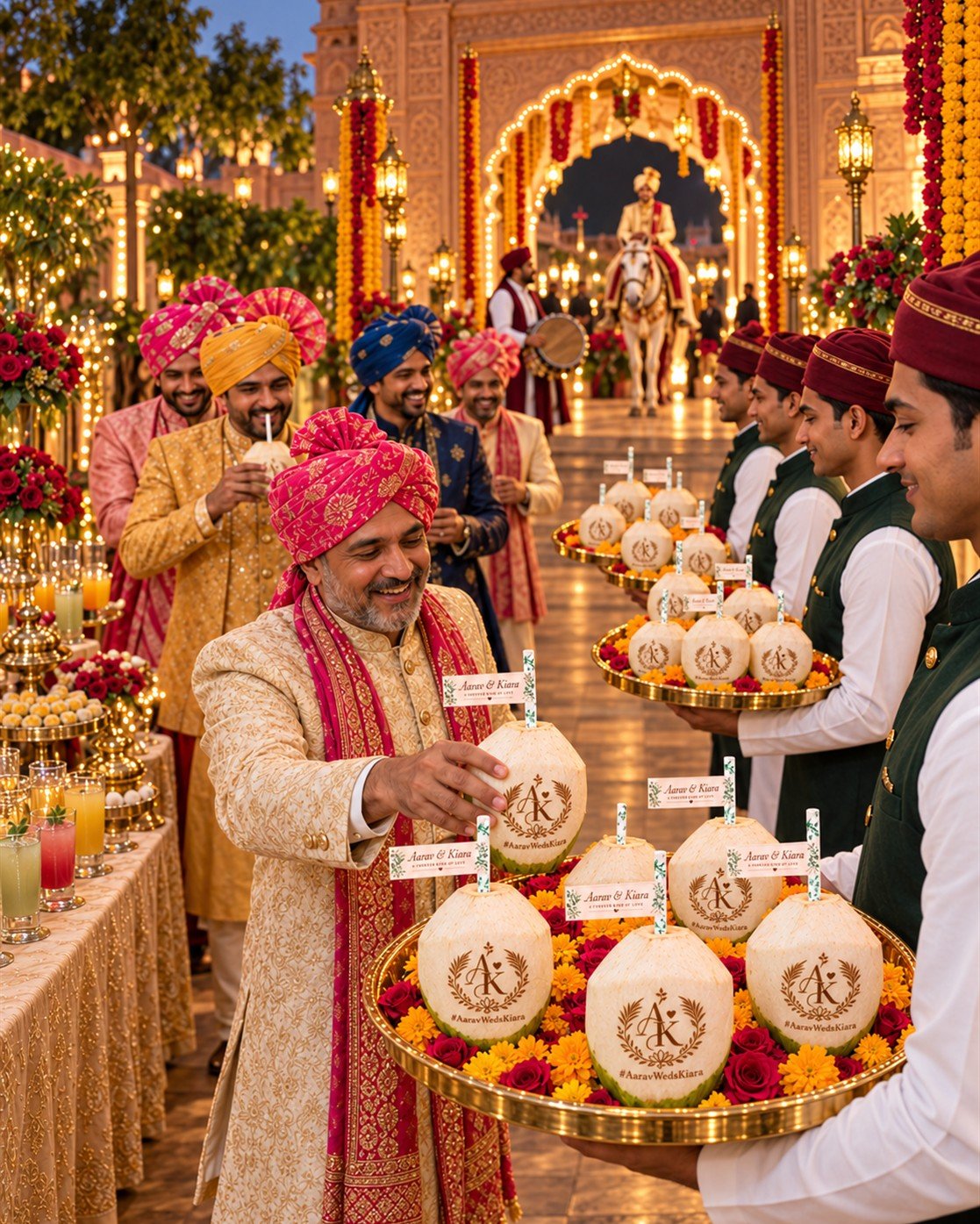
Better still, replace one soft-drink station per function with a live counter. A vendor who engraves the couple's names on each coconut turns a drink into a photograph, which is why the customised coconut format has spread from Jaipur to Bangalore so quickly.
The quick map planners in Jaipur and Mumbai now use:
Wherever guests are hot, moving or waiting, a fresh cold drink served live outperforms anything in a bottle. For city-wise options, see the Mumbai coconut station page or all guides on the Mr. Coconut blog.
Fresh tender coconut water, because it suits every guest, every ritual and the November-to-February season. Aam panna, sugarcane and jaljeera are strong traditional alternatives.
Bottled cola is still the most common, but coconut water, nimbu pani and mocktails are the staples guests actually remember.
One coconut per guest per function, so roughly 300, plus 15 to 20 percent extra for the baraat and the sangeet.
Yes. It is plant-based, needs no additives and is served straight from the fruit, so it works at every kind of Indian wedding.
No. Professional counters pre-trim and cap each coconut, serve with a straw and clear shells immediately. Venues like Umaid Bhawan Palace and Jai Mahal Palace host them regularly.
For haldi and mehendi it is coconut water and fruit coolers; for the sangeet it is mocktails.
At least ten days for a standard booking, and four to six weeks for peak dates between November and February when Jaipur, Udaipur and Goa venues are fully booked.
Fresh, hydrating and quick-to-serve non-alcoholic baraat welcome ideas for destination weddings in India, with serving tips for 300+ baraatis, winter options an…
Barat swagat ideas for 2026–27: why chilled, personalized coconut water is the best drink for baraat welcome, plus setup, quantity and cost tips.
Weddings in 2026–27 run 2–4 days. Here's how a coconut water stall fits every function — welcome night, haldi brunch, mehendi, baraat and farewell breakfast — a…
Share a few details and we'll reply on WhatsApp with availability, design options and a quote for your event.